
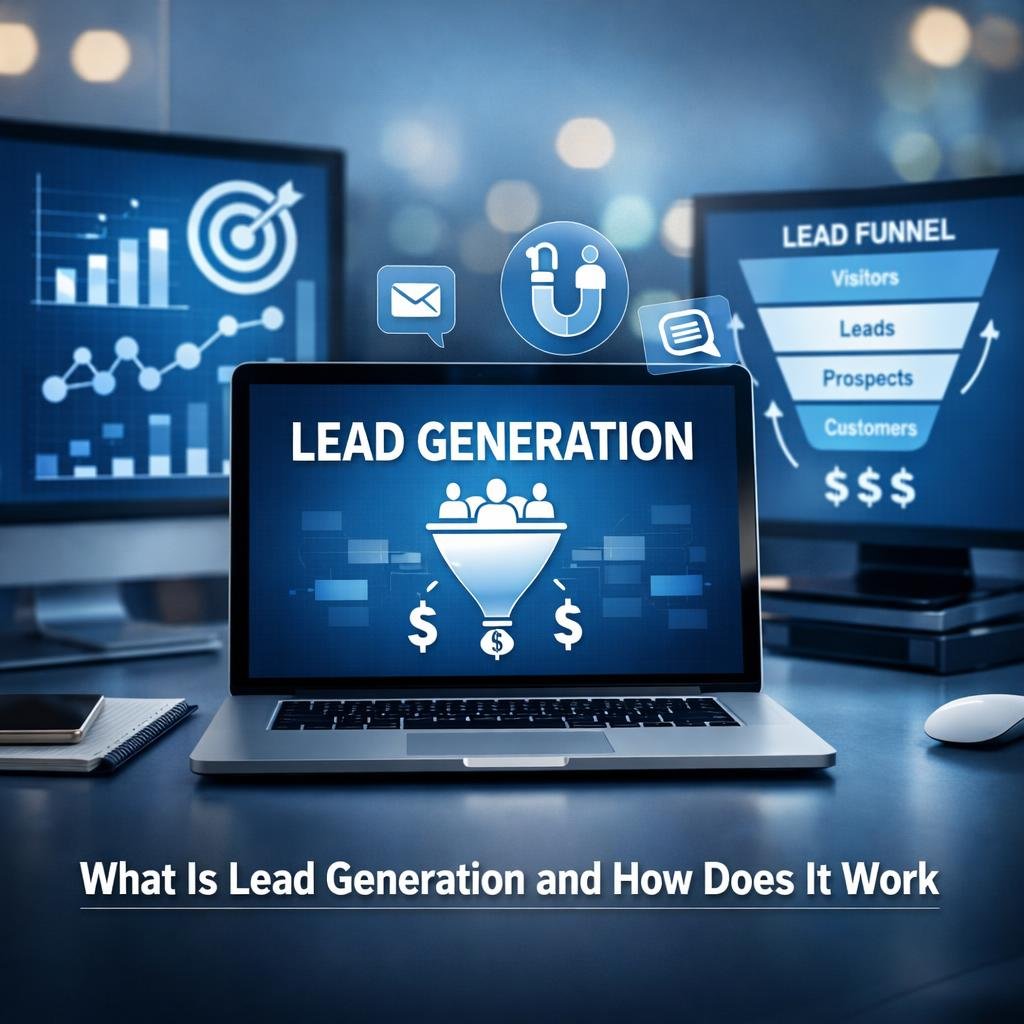
Every business needs a steady flow of new customers to survive and grow. But finding those customers — and convincing them to pay attention — is rarely simple. That’s where lead generation comes in. It’s the process of attracting people who might be interested in what you offer and turning that interest into a real business opportunity.
Think of lead generation as the engine behind your entire sales process. Without it, your sales team has no one to talk to, your marketing budget produces no results, and your business stalls. With a solid system in place, you create a predictable pipeline of potential customers who are already interested in what you do.
This guide breaks down exactly what lead generation is, how it works, and how to build a system that actually delivers results. Whether you’re just getting started or trying to fix a process that isn’t performing, you’ll find practical, actionable guidance here.
Understanding Lead Generation
What Is Lead Generation and Why It Matters
Lead generation is the process of attracting and capturing interest from people who could become customers. It sits at the very beginning of your marketing strategy and feeds everything that comes after it. Without leads, there’s no pipeline, no revenue, and no growth.
The goal isn’t just to collect names and email addresses. It’s to bring in the right people — those who have a genuine need for your product or service. Quality always beats quantity when it comes to lead generation, because a smaller list of well-matched prospects will always outperform a massive list of uninterested contacts.
Customer acquisition starts here. Every sale your business makes can be traced back to a moment when someone first showed interest. Lead generation is how you create and capture that moment consistently.
Key Terms: Leads, Prospects, and the Sales Funnel
Understanding the vocabulary helps you build better systems. Here’s a quick breakdown of the most important terms:
| Term | Definition | Where It Fits |
|---|---|---|
| Lead | Someone who has shown interest in your offer | Top of the sales funnel |
| Prospect | A lead who fits your ideal customer profile | Middle of the funnel |
| MQL | Marketing Qualified Lead — engaged but not sales-ready | Mid-funnel |
| SQL | Sales Qualified Lead — ready for a sales conversation | Bottom of the funnel |
| Customer | A lead who has made a purchase | Post-funnel |
A Marketing Qualified Lead has interacted with your content or campaigns but isn’t ready to buy yet. A Sales Qualified Lead has been vetted and is actively considering a purchase. Knowing the difference helps your team focus energy in the right places.
How Lead Generation Fits into Marketing and Sales
Lead generation bridges the gap between marketing and sales. Marketing creates awareness and attracts potential customers. Sales converts those people into paying clients. Lead generation is the handoff point between the two.
In inbound marketing, leads come to you through content, search, and social channels. In outbound marketing, you go to them through cold outreach, ads, and direct contact. Most successful businesses use both approaches together. If you want a clear overview of the full process, this simple guide to how lead generation works walks through each stage in detail.
The sales funnel only works when leads are consistently entering at the top. Without that steady flow, even the best sales team will struggle to hit targets.
Core Components of an Effective Lead Generation System
Identifying Your Target Audience and Ideal Customer
Before you build anything, you need to know exactly who you’re trying to reach. Your target audience defines every decision you make — from the channels you use to the words you write. Getting this wrong means wasting budget on people who will never buy.
Start by building a detailed profile of your ideal customer. Consider their job role, industry, pain points, goals, and buying behavior. In B2B marketing, this often means targeting specific decision-makers within companies of a certain size or sector.
The more specific your audience definition, the more effective your campaigns will be. Broad targeting feels safe but produces weak results. Narrow targeting feels risky but delivers far better return on investment.
Crafting a Compelling Offer or Lead Magnet
A lead magnet is something valuable you offer in exchange for contact information. It’s the core of most digital marketing lead generation strategies. Without a strong offer, people have no reason to share their details with you.
Effective lead magnets include:
- Free guides, checklists, or templates
- Webinars or video training
- Free trials or product demos
- Discount codes or exclusive offers
- Quizzes or assessments with personalized results
The best lead magnets solve a specific problem quickly. They give your audience an immediate win and position your business as the expert they should trust for more.
Creating High-Converting Landing Pages and Forms
A landing page is a standalone web page designed with one purpose: to convert visitors into leads. It removes distractions and focuses entirely on getting someone to take a specific action. Conversion rate optimization starts here.
Your landing page needs a clear headline, a concise description of the offer, social proof, and a simple form. Keep the form short — asking for too much information upfront kills conversions. Name and email address is often enough to start.
Every element on the page should support the single goal of getting the visitor to submit their information. Navigation menus, unrelated links, and competing messages all reduce your conversion rate.
Using Calls to Action to Guide Visitor Behavior
A call to action (CTA) tells your visitor exactly what to do next. It’s one of the most important elements in any lead generation campaign. Weak or vague CTAs are one of the top reasons campaigns underperform.
Good CTAs are specific, benefit-focused, and visually prominent. “Download Your Free Guide” performs better than “Submit.” “Start Your Free Trial” outperforms “Click Here.” The language should match what the visitor actually gets.
Place CTAs strategically throughout your content — not just at the bottom of a page. Visitors who are ready to act shouldn’t have to scroll to find the next step.
Step-by-Step: How to Set Up Lead Generation
Step 1: Define Goals and Choose Success Metrics
Start with clarity on what success looks like. Are you trying to generate a certain number of leads per month? Improve your conversion rate? Reduce cost per lead? Without defined goals, you can’t measure progress or make smart decisions.
Common metrics to track include:
- Number of leads generated per campaign
- Cost per lead
- Lead-to-customer conversion rate
- Return on investment by channel
- Lead quality scores
Set realistic benchmarks based on your industry and current performance. Then track consistently so you can spot what’s working and what needs adjustment.
Step 2: Select Your Lead Generation Channels
Not every channel works for every business. Your choice of channels should be driven by where your target audience spends time and how they prefer to receive information.
Popular lead generation channels include:
- Search engine optimization (SEO) for organic traffic
- Pay-per-click (PPC) advertising for fast, targeted reach
- Email marketing for nurturing and re-engagement
- Social media marketing for awareness and engagement
- Content marketing through blogs, videos, and podcasts
- Webinars and live events for high-intent audiences
Start with one or two channels and master them before expanding. Spreading too thin too early leads to mediocre results across the board.
Step 3: Build and Connect Your Tools (Website, CRM, Email)
Your tools need to work together seamlessly. A customer relationship management (CRM) system stores and organizes your leads. Your website captures them. Your email marketing platform nurtures them. When these systems are connected, data flows automatically and nothing falls through the cracks.
Choose a CRM that fits your team size and workflow. Popular options range from simple contact managers to full sales platforms with lead scoring built in. Lead scoring assigns values to leads based on their behavior and profile, helping your sales team prioritize the most promising contacts.
Integration is everything. A disconnected tech stack creates manual work, data errors, and missed follow-up opportunities.
Step 4: Launch, Monitor, and Optimize Your Campaigns
Once everything is set up, launch your campaign and start collecting data immediately. Don’t wait for perfection — real-world data is more valuable than any assumption you can make before launch.
Monitor your key metrics weekly. Look for patterns: which traffic sources produce the best leads, which landing pages convert highest, which CTAs get the most clicks. Use that data to make incremental improvements over time.
Lead nurturing is what happens after the initial capture. Use email sequences, retargeting ads, and personalized content to move leads through the sales funnel toward a purchase decision.
Practical Applications, Examples, and Troubleshooting
Common Online and Offline Lead Generation Tactics
Online tactics dominate modern lead generation, but offline methods still deliver strong results in many industries. The best approach combines both.
Online tactics include SEO-driven blog content, PPC campaigns, social media marketing, email marketing sequences, and gated content like whitepapers or webinars. Each of these drives potential customers into your funnel through digital touchpoints.
Offline tactics include networking events, trade shows, direct mail, referral programs, and in-person demonstrations. These work especially well for local businesses and industries where relationships drive decisions.
Examples for B2B, B2C, and Service-Based Businesses
Lead generation looks different depending on your business model. A B2B software company might use LinkedIn ads and gated case studies to attract decision-makers. For a deeper look at what works in that space, explore these B2B lead generation strategies that actually work and apply the ones that fit your model.
A B2C e-commerce brand might use Instagram ads with a discount code offer to capture email addresses from shoppers. The tactics that convert well for consumer audiences are quite different — if that’s your focus, these B2C lead generation tips cover the most effective approaches in detail.
A service-based business like a law firm or marketing agency often relies on content marketing, SEO, and referrals. Free consultations and downloadable guides work well as lead magnets in these contexts.
Common Problems and How to Fix Them (Low Traffic, Low Conversions, Poor Lead Quality)
Even well-designed systems run into problems. Here’s how to diagnose and fix the most common ones:
Low traffic means not enough people are finding your landing pages or content. Fix this by investing in SEO, increasing your PPC budget, or ramping up social media marketing activity.
Low conversions mean traffic is arriving but not taking action. Review your landing page copy, simplify your form, strengthen your CTA, and test different offers. Small changes can produce significant improvements in conversion rate.
Poor lead quality means the people entering your funnel aren’t a good fit. Tighten your targeting criteria, refine your lead magnet to attract a more specific audience, and use lead scoring to filter out low-quality contacts before they reach your sales team.
Conclusion
Lead generation is not a one-time campaign — it’s an ongoing system that requires consistent attention, testing, and refinement. The businesses that do it well treat it as a core function, not an afterthought. They know their audience, offer real value, and use data to improve continuously.
Start simple. Pick one channel, build one strong offer, and create a clean landing page with a clear call to action. Connect your tools, launch, and learn from the results. Then build from there.
A well-functioning lead generation system is one of the most valuable assets your business can have. It creates predictability, supports your sales team, and drives sustainable growth over time.
FAQ
What is the difference between a lead and a customer?
A lead is someone who has shown interest in your product or service but hasn’t made a purchase yet. A customer is someone who has completed a transaction. The lead generation process is what moves people from the first stage to the second, through nurturing, follow-up, and sales conversations.
How long does it take for lead generation to start working?
It depends on the channels you use. PPC advertising can generate leads within days of launching a campaign. SEO and content marketing typically take several months to build momentum. Email marketing results depend on the size and quality of your existing list. Most businesses see meaningful results within the first few months when they commit to a consistent strategy.
What is the best channel to start with for lead generation?
There’s no single best channel — it depends on your audience, budget, and goals. For most small businesses, a combination of SEO-driven content and email marketing provides a strong, cost-effective foundation. If you need faster results, PPC advertising delivers leads quickly while your organic channels build over time. Start where your target audience is most active and where you can realistically execute well.