
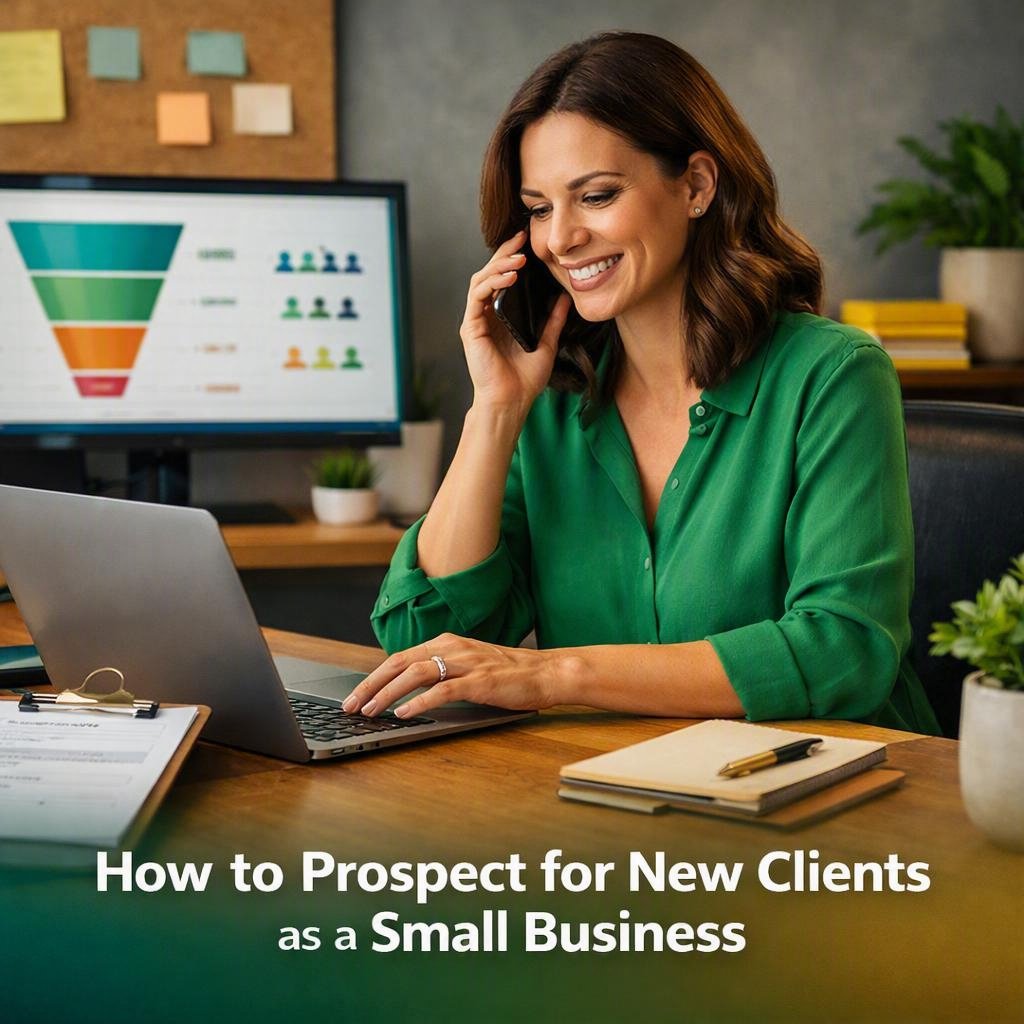
Finding new clients is one of the most consistent challenges small business owners face. You can have a great product or service, but without a steady flow of prospects moving through your sales funnel, growth stalls. Client prospecting is the engine that keeps your business moving forward, and most small businesses either skip it entirely or do it inconsistently.
The good news is that prospecting does not require a massive budget or a dedicated sales team. With the right approach, even a solo operator can build a reliable pipeline of qualified leads. Understanding how customer acquisition works for small businesses is a smart starting point before you build out your prospecting system.
This guide walks you through everything from defining your ideal client to closing your first conversation. Each section is practical and actionable, designed for small business owners who need results without wasting time on tactics that do not work.
Understanding Client Prospecting for Small Businesses
What Prospecting Is and Why It Matters
Client prospecting is the process of identifying potential customers, reaching out to them, and moving them toward a buying decision. It sits at the very top of your sales funnel and feeds everything that comes after it. Without consistent prospecting, your pipeline dries up and your revenue becomes unpredictable.
Many small business owners confuse marketing with prospecting. Marketing builds brand awareness and attracts attention broadly. Prospecting is more targeted and direct. It involves actively seeking out specific individuals or businesses that match your ideal customer profile and initiating contact with them.
Prospecting is not optional for sustainable business growth. It is a core business activity that should happen on a regular schedule, not just when revenue dips.
Clarifying Your Ideal Client Profile
Before you reach out to anyone, you need to know exactly who you are trying to reach. Your ideal customer profile describes the type of client most likely to buy from you, stay with you, and refer others to you. Without this clarity, your prospecting efforts scatter and produce weak results.
Think about your best current or past clients. What do they have in common? Consider factors like industry, company size, location, budget, and the specific problems they needed solved. The more specific you get, the more effective your outreach becomes.
- Demographics: age, location, income level, or business size
- Psychographics: values, goals, pain points, and buying behavior
- Behavioral signals: what they search for, where they spend time online
- Budget and decision-making authority
Setting Clear Prospecting Goals and Metrics
Prospecting without goals is just activity. You need measurable targets to know whether your efforts are working. Learning how to set small business goals that actually drive results will help you build a prospecting plan with real accountability built in.
| Metric | What to Track | Why It Matters |
|---|---|---|
| Outreach Volume | Contacts made per week | Measures activity level |
| Response Rate | Replies per outreach sent | Measures message quality |
| Conversion Rate | Prospects turned into clients | Measures overall effectiveness |
| Pipeline Value | Estimated revenue from active leads | Forecasts future income |
| Cost Per Lead | Spend divided by leads generated | Measures efficiency |
Set a weekly prospecting goal and track it every single week. Even simple numbers like ten new contacts per week give you something to measure and improve.
Preparing Your Prospecting Foundations
Crafting a Compelling Value Proposition
Your value proposition is the clearest, most direct answer to the question every prospect is silently asking: why should I choose you? It is not a tagline or a mission statement. It is a specific statement that explains what you do, who you help, and what outcome they can expect.
A strong value proposition removes friction from your prospecting conversations. When prospects immediately understand what you offer and why it matters to them, they are far more likely to engage. Weak or vague messaging kills interest before it starts.
Keep it simple: one sentence that names your target audience, the problem you solve, and the result you deliver.
Building Basic Prospecting Assets (Website, Profiles, Materials)
You do not need a fancy website to start prospecting, but you do need a credible online presence. A clean, professional website with a clear description of your services, social proof, and a contact method is the minimum. Prospects will look you up before they respond to your outreach.
Your LinkedIn profile matters enormously for B2B sales and professional services. Treat it like a landing page, not a resume. Your headline should speak to your target audience, not just list your job title. A complete Google Business Profile also builds trust for local business marketing.
- A professional website with clear service descriptions
- An optimized LinkedIn profile with a client-focused headline
- A Google Business Profile for local visibility
- A short one-page overview or digital brochure you can share
Organizing Prospects with Simple CRM or Spreadsheets
Tracking your prospects is not optional. Without a system, leads fall through the cracks and follow-ups never happen. CRM software like HubSpot, Zoho, or even a well-organized spreadsheet can serve as your sales pipeline tracker.
At minimum, record each prospect’s name, contact information, where they came from, the last time you contacted them, and what the next step is. This simple habit keeps your prospecting organized and ensures nothing gets forgotten.
A CRM does not need to be expensive or complex to be effective. Start with what you can manage consistently and upgrade as your volume grows.
Step-by-Step Methods to Find and Reach New Clients
Leveraging Your Existing Network and Referrals
Your existing network is your fastest path to new clients. People who already know, like, and trust you are far more likely to refer business your way or become clients themselves. Referral marketing consistently produces higher-quality leads than almost any other channel.
Start by making a list of everyone you know: former colleagues, current clients, vendors, friends, and community contacts. Reach out personally, not with a mass email. Let them know what you do, who you help, and ask if they know anyone who might benefit.
- Ask satisfied clients directly for referrals
- Create a simple referral incentive program
- Stay in regular contact with your network, not just when you need something
- Join professional associations where your ideal clients gather
Using Online Channels (Search, Social Media, Directories)
Online channels give small businesses access to a much larger pool of prospects than local networking alone. Social media marketing, search visibility, and online directories all contribute to lead generation when used consistently. Knowing which digital marketing channels work best for small businesses helps you focus your energy where it counts most.
LinkedIn prospecting is particularly effective for B2B sales. Use LinkedIn’s search filters to find decision-makers in your target industries, connect with a personalized message, and start a genuine conversation before pitching anything. Content marketing on LinkedIn also builds brand awareness over time.
For local businesses, search visibility matters enormously. Appearing in local search results when prospects are actively looking for your services is one of the highest-converting lead generation strategies available.
Prospecting Through Local Events and Community Involvement
Networking in person still works. Local business events, chamber of commerce meetings, industry meetups, and community organizations all create opportunities to meet potential clients face to face. These connections often convert faster because trust builds more quickly in person.
The goal at any networking event is not to collect business cards. It is to have real conversations, understand what others need, and identify whether there is a genuine fit. Follow up within a day or two while the conversation is still fresh.
- Attend industry-specific events where your ideal clients gather
- Volunteer for local organizations to build visibility and goodwill
- Speak at local events to establish authority in your field
- Host your own small workshop or information session
Cold Outreach: Email, Calls, and Direct Messages
Cold outreach gets a bad reputation because most people do it poorly. Generic, self-focused messages get ignored. Personalized, relevant outreach that speaks directly to a prospect’s situation gets responses. The difference is research and relevance.
Before sending a cold email or making a cold call, learn something specific about the prospect. Reference their business, a recent achievement, or a challenge common in their industry. Keep your message short, lead with value, and make your ask small. Asking for a brief conversation is far less threatening than asking for a sale.
Email marketing sequences, direct messages on LinkedIn, and cold calling all have a place in a well-rounded prospecting strategy. Test different approaches and track which ones generate the best response rates for your specific audience.
Following Up Consistently Without Being Pushy
Most sales happen after multiple touchpoints, yet most small business owners give up after one or two attempts. A consistent follow-up strategy is one of the highest-leverage activities in your entire prospecting process.
The key is to add value with each follow-up rather than simply checking in. Share a relevant article, offer a useful tip, or reference something specific to their situation. Space your follow-ups appropriately and always give the prospect an easy way to opt out if they are not interested.
Persistence and pushiness are not the same thing. Respectful, value-driven follow-up is a professional standard, not an imposition.
Turning Prospects into Paying Clients
Qualifying Leads and Prioritizing High-Value Prospects
Not every prospect deserves equal attention. Qualifying leads means determining which prospects have the budget, authority, need, and timeline to actually become clients. Spending time on unqualified leads is one of the most common ways small business owners waste their prospecting efforts.
Use a simple qualification framework. Ask yourself whether the prospect has a real problem you can solve, whether they have the budget to pay for your solution, and whether they are the decision-maker. If the answer to any of these is unclear, your next step is to find out before investing more time.
Conducting Effective Discovery Conversations
A discovery conversation is not a sales pitch. It is a structured dialogue designed to understand the prospect’s situation, goals, and challenges. The more you listen in this conversation, the more effectively you can position your solution.
Prepare a short list of open-ended questions that help you understand their current situation, what they have tried before, and what success looks like to them. Avoid talking about your services until you fully understand their needs. This approach builds trust and dramatically improves your conversion rate.
Offering the Right Next Step (Trials, Audits, Consultations)
After a discovery conversation, the prospect needs a clear, low-risk next step. A free consultation, a brief audit of their current situation, or a small trial project reduces the perceived risk of working with you for the first time. This is especially important for new client relationships where trust is still being established.
Match your offer to where the prospect is in their decision process. Someone who is just exploring needs something different from someone who is ready to buy. Tailoring your next step to their readiness increases the likelihood they will say yes.
Tracking Results and Improving Your Prospecting Process
Prospecting is a skill that improves with deliberate practice and honest measurement. Review your results regularly. Which outreach methods produce the most responses? Which conversations convert most often? Where do prospects drop out of your sales pipeline?
Use what you learn to refine your messaging, adjust your targeting, and improve your follow-up sequences. Small improvements in each stage of your process compound into significantly better results over time. Treat your prospecting system like any other business process: measure it, improve it, and repeat.
Conclusion
Building a consistent flow of new clients does not happen by accident. It requires a clear ideal client profile, a compelling value proposition, organized systems, and disciplined outreach across multiple channels. Every element covered in this guide works together to create a prospecting process that generates real results.
Start with one or two methods that fit your current situation and build from there. Consistency matters far more than perfection. A small business that prospects every week, tracks its results, and improves over time will always outperform one that waits for clients to appear on their own.
FAQ
How much time should I spend prospecting each week?
Most small business owners should dedicate a minimum of five to ten hours per week to prospecting activities. This includes research, outreach, follow-up, and networking. The exact amount depends on your current client load and growth goals, but prospecting should happen every week without exception.
What is the best prospecting method for a small business with a low budget?
Referral marketing and networking are the most cost-effective prospecting methods available. Asking existing clients for referrals costs nothing and produces high-quality leads. LinkedIn prospecting and local community involvement are also low-cost strategies that deliver strong results when done consistently.
How do I follow up with prospects without feeling pushy or annoying?
Focus on adding value with every follow-up message. Share something relevant, offer a helpful insight, or reference a specific detail from your previous conversation. Space your follow-ups over several weeks and always give the prospect a respectful way to decline. Genuine helpfulness never feels pushy.